RWANDA GENOCIDE
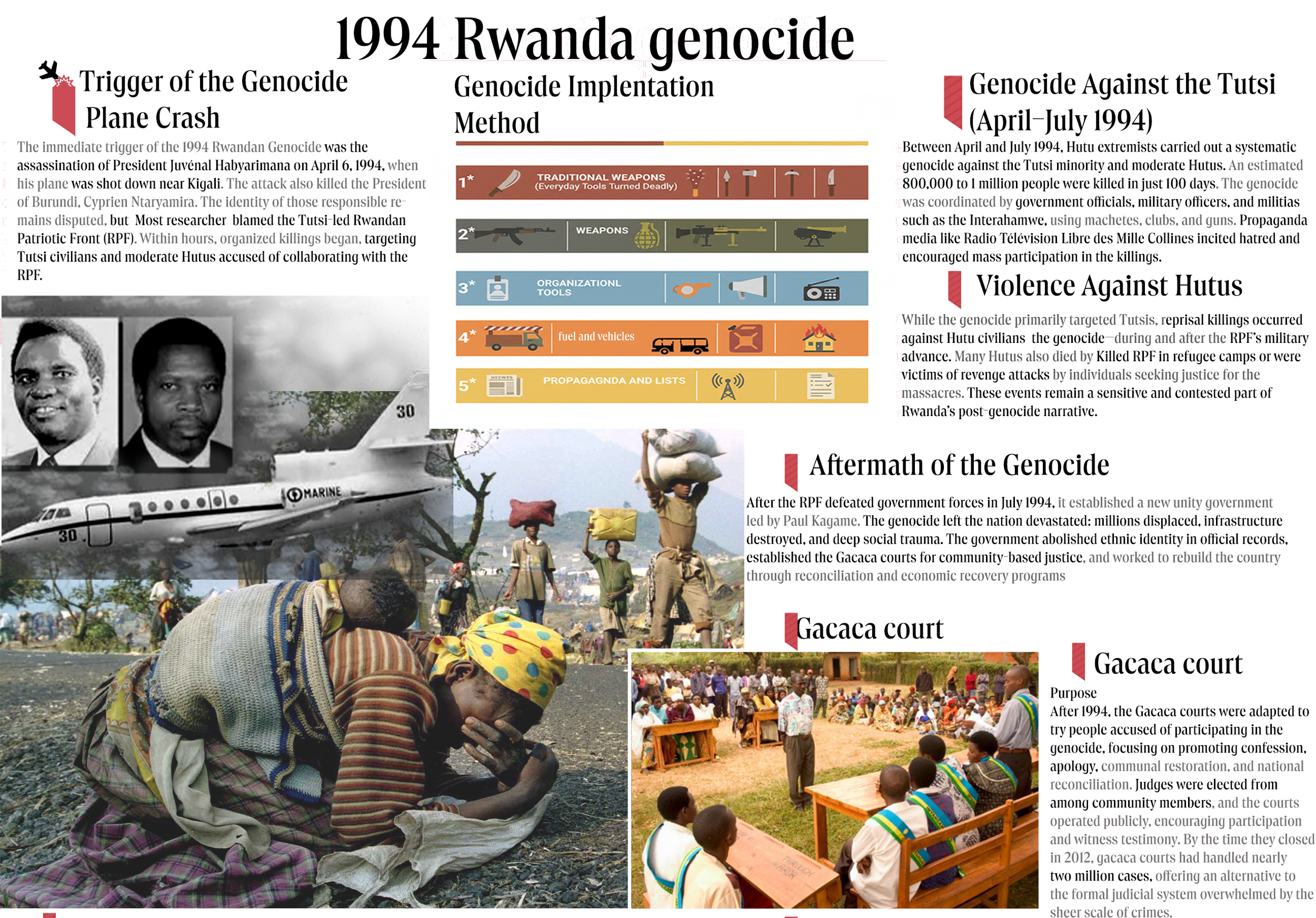
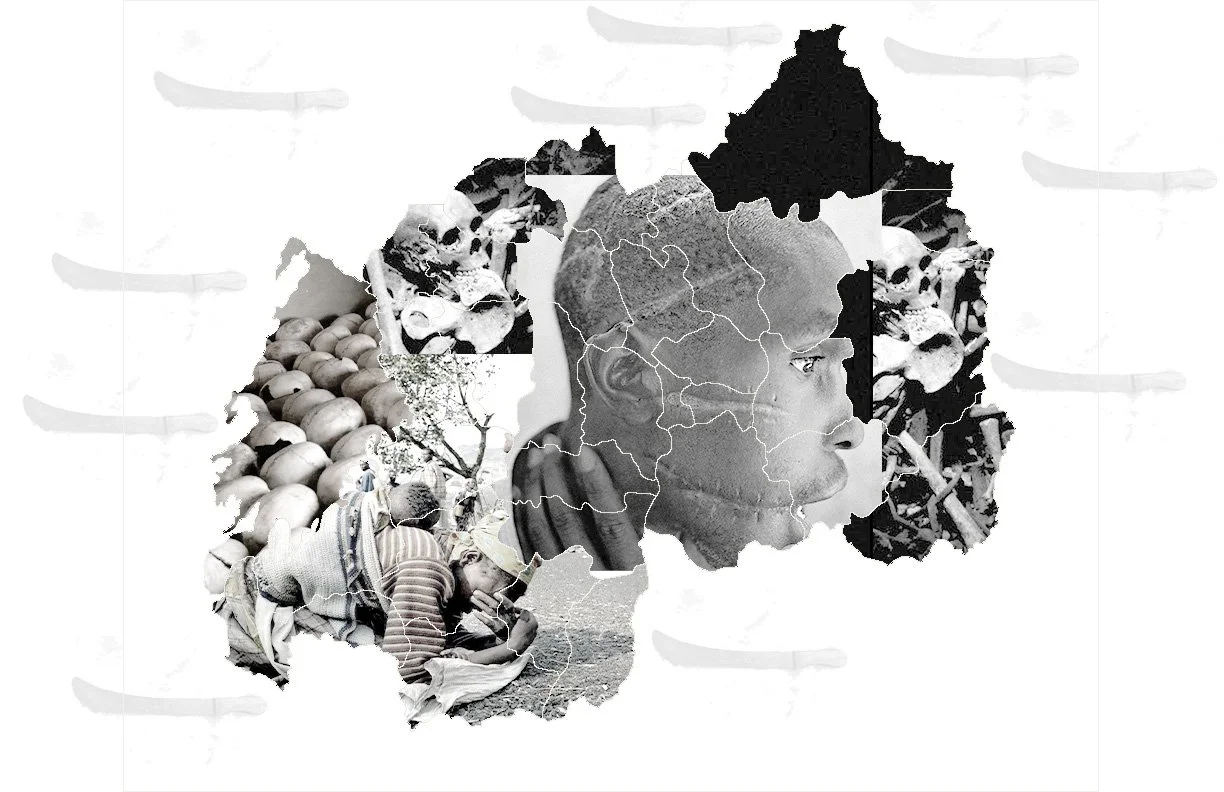
The Rwandan genocide occurred over roughly 100 days, from April 7 to July 19, 1994, and was rooted in long-standing ethnic tensions between the Hutu and Tutsi groups. The genocide was triggered by the death of Hutu President Juvénal Habyarimana on April 6, which led Hutu extremists to organize the mass killing of Tutsis and moderate Hutus.
During this period, at least one million people died, with scholarly estimates suggesting that between 800,000 and 1,000,000 Tutsis and moderate Hutus were killed in just three months. Many victims were targeted by their neighbors and even family members, and the violence included widespread sexual assault, with over 200,000 women raped.
Most scholars argue that the Rwandan genocide was planned and organized by the Hutu government. Local authorities and militias, such as the Interahamwe and Impuzamugambi, were mobilized to carry out the killings. The Rwandan Patriotic Front (RPF), a Tutsi-led rebel group, eventually halted the massacre by seizing power. Following the genocide, significant violence against Hutus also occurred, often referred to as Hutu genocide, mainly perpetuated by the RPF during and after the genocide in Rwanda and Congo.
The country was left with deep wounds and the challenge of rebuilding. After 32 years, Rwanda has become one of the fastest-developing countries in Africa. However, while some reconciliation and justice have been achieved, many aspects of the RPF's actions during and after the genocide remain hidden.