

Empowering Rwandans Through Civic Education: Understanding, Resisting, and Rejecting Oppressive Laws.
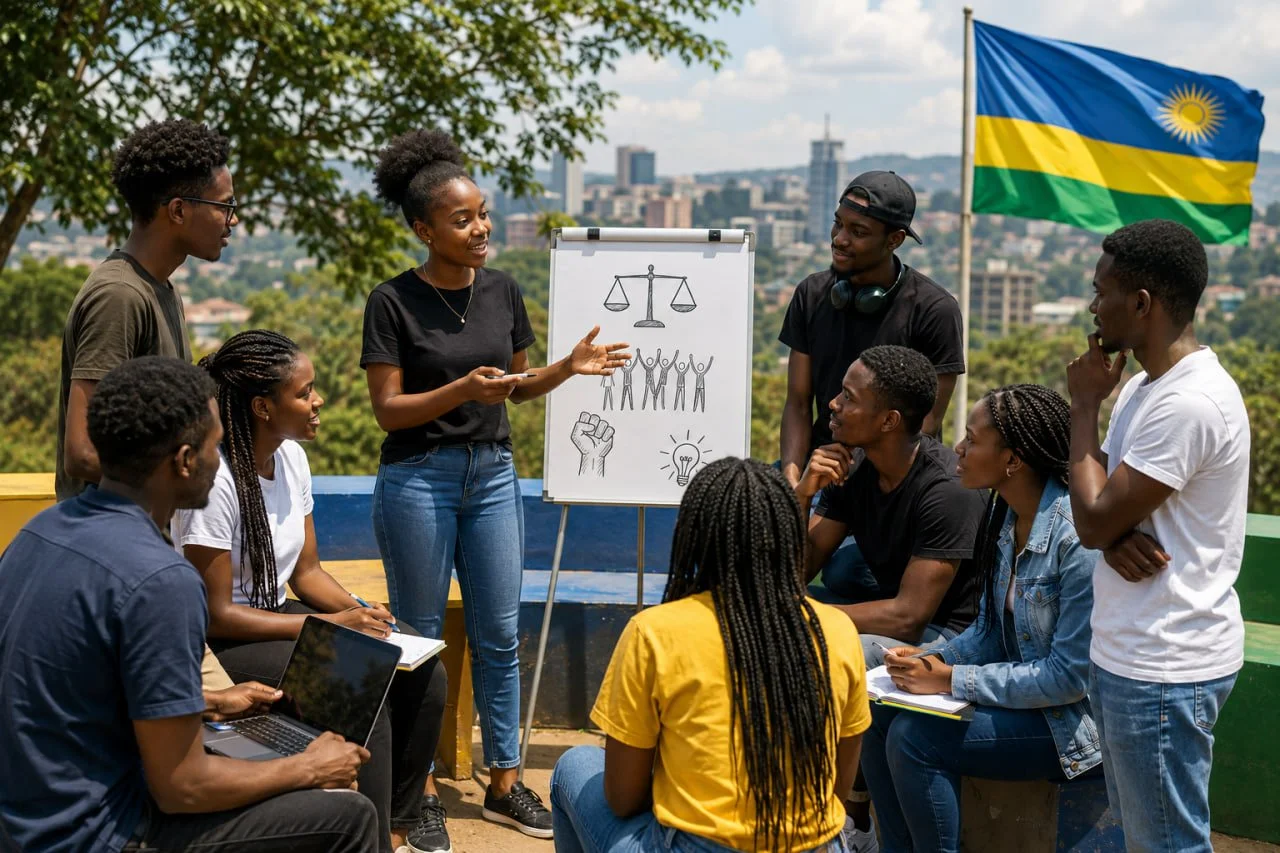
MillenZmovementRw engages in civic education and dialogue, symbolizing youth empowerment, democratic participation, and collective action for a more accountable and inclusive society.
Why Civic Education Matters
A free society is not built solely through elections, economic growth, or government institutions. It is built through informed citizens who understand their rights, responsibilities, and power within society.
Throughout history, oppressive laws have often survived not because they were just, but because ordinary people were never taught how to challenge them. When citizens lack civic education, they become vulnerable to manipulation, fear, and misinformation. They may obey laws without questioning whether those laws respect human dignity, constitutional principles, or fundamental freedoms.
For Rwanda's young generation, civic education is not simply an academic subject. It is a tool for empowerment. It helps citizens understand the difference between respecting legitimate authority and surrendering their rights.
What Makes a Law Oppressive?
Not every law is automatically just because it exists.
History provides countless examples of laws that were legal but unjust. Around the world, laws have been used to suppress free speech, restrict political participation, discriminate against groups, silence journalists, and protect those in power from accountability.
An oppressive law is one that unjustly restricts fundamental rights and freedoms. Such laws may:
Limit freedom of expression.
Restrict freedom of association.
Prevent peaceful political participation.
Discriminate against certain groups.
Criminalize legitimate criticism of government actions.
Create unequal treatment before the law.
Citizens have both the right and responsibility to examine whether laws serve the public interest or merely protect those in power.
The Constitution Belongs to the People
In any constitutional republic, the constitution is meant to be the highest law of the land.
Governments derive their authority from the people, not the other way around. Public institutions are created to serve citizens, protect rights, and uphold justice.
When citizens understand constitutional principles, they become less vulnerable to political intimidation and more capable of holding leaders accountable.
Civic education teaches that patriotism does not mean unquestioning obedience. Genuine patriotism means caring enough about one's country to demand justice, transparency, accountability, and respect for human rights.
A nation grows stronger when citizens actively participate in shaping its future.
The Power of Peaceful Civic Resistance
Throughout history, major democratic reforms have been achieved through peaceful civic action.
Citizens organized.
Students educated themselves.
Journalists exposed wrongdoing.
Communities demanded accountability.
Human rights defenders raised awareness.
Peaceful resistance can take many forms:
Educating others about their rights.
Community discussions.
Public awareness campaigns.
Independent journalism.
Civic advocacy.
Peaceful assembly.
Voting and political participation.
Documenting abuses and sharing verified information.
The most effective resistance often begins with knowledge.
An informed citizen is difficult to manipulate.
Breaking the Culture of Fear
One of the greatest obstacles to civic participation is fear.
People may fear speaking openly about corruption, injustice, poor governance, or violations of rights. Fear can convince citizens that remaining silent is safer than seeking change.
Yet history shows that progress rarely comes from silence alone.
Civic education helps citizens understand that they are not isolated individuals facing problems alone. They are members of communities with shared interests, shared rights, and shared aspirations.
When citizens become informed, connected, and engaged, fear gradually loses its power.
Why Young People Matter
Young people are often the first targets of political indoctrination because they represent the future.
Governments, political parties, and powerful institutions understand that shaping how young people think today can influence society for decades.
That is why independent civic education is so important.
Young people should learn how to ask questions, evaluate evidence, think critically, and engage respectfully with differing viewpoints.
A healthy society does not fear critical thinking.
It encourages it.
The future of Rwanda depends not on citizens who simply repeat official narratives, but on citizens capable of independent thought, informed debate, and constructive participation.
Building a Culture of Democratic Citizenship
Democracy is more than voting.
It is a culture built on participation, accountability, and respect for human dignity.
Citizens should understand:
Their constitutional rights.
Their civic responsibilities.
How public institutions function.
How laws are created.
How leaders are held accountable.
How peaceful advocacy can influence public policy.
Civic education transforms citizens from passive observers into active participants.
It replaces fear with knowledge.
It replaces helplessness with action.
It replaces blind loyalty with informed citizenship.
The Mission Ahead
The future of Rwanda belongs to its people.
No government, political party, or public institution should be beyond scrutiny. A healthy nation welcomes informed citizens who ask questions, challenge injustice, and participate peacefully in public life.
The goal of civic education is not to create opposition for its own sake.
The goal is to create empowered citizens who understand their rights, defend democratic values, reject oppression, and contribute to building a more just, accountable, and inclusive Rwanda.
Knowledge is power.
An informed people cannot easily be manipulated.
An empowered people cannot easily be silenced.
And a generation educated in its rights becomes the strongest foundation for freedom, justice, and lasting democratic change.
