

From Citizens to Loyalists: How Rwanda’s Youth Became the Backbone of Kagame’s Political System.
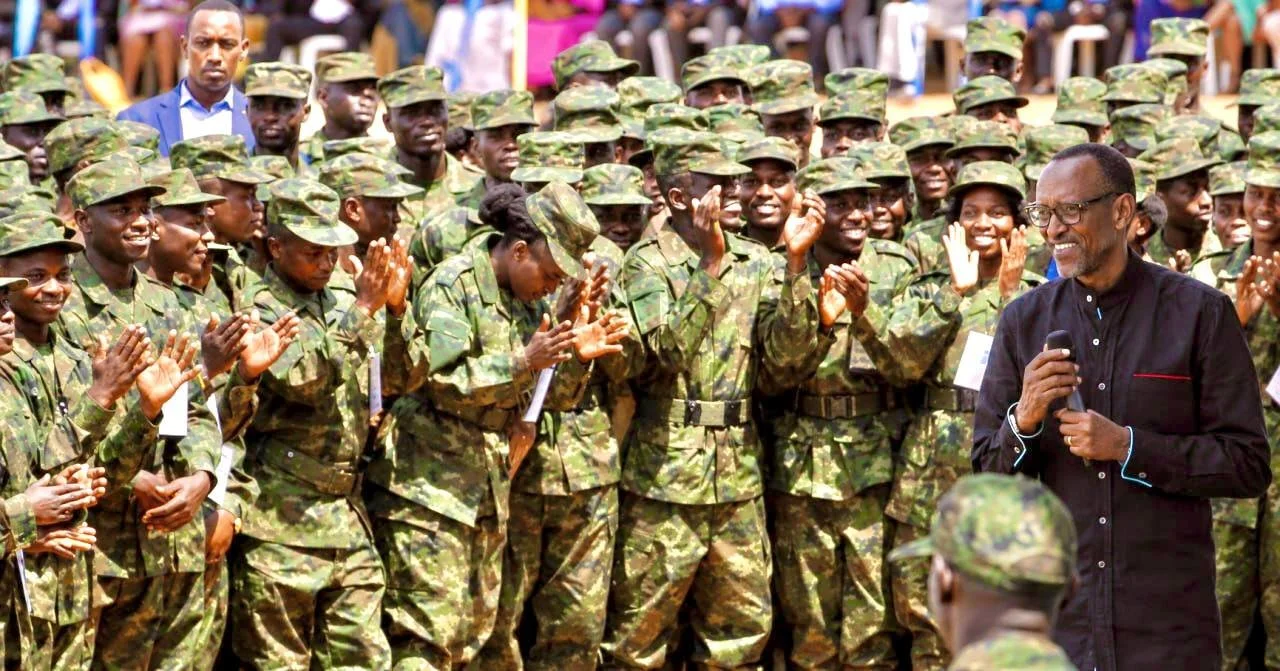
The Politics of Youth Manipulation: Exploitation and Scapegoating within Rwanda's Political Party Structures
The Generation Raised Inside the Narrative
For more than three decades, Rwanda’s ruling party has invested heavily in shaping how young people understand history, citizenship, patriotism, and political loyalty. Officially, these programs are presented as tools of reconciliation, national unity, and post-genocide recovery. Government officials argue that they helped rebuild a country shattered by the 1994 Genocide against the Tutsi and prevented future ethnic violence.
But behind the language of unity lies a growing body of academic research, testimony, and human rights criticism suggesting something far more complex: the construction of a political culture where loyalty to the ruling Rwandan Patriotic Front (RPF) becomes inseparable from loyalty to the nation itself.
The result is a generation that often celebrates the very political system many critics accuse of suppressing dissent, restricting freedoms, and punishing independent voices.
For observers of Rwanda, this raises a troubling question:
How does a government maintain admiration among young people even as critics accuse it of authoritarianism?
The answer may begin inside Ingando.
Ingando: Civic Education or Political Conditioning?
Following the genocide, the Kagame government established Ingando solidarity camps. Officially, these camps were created to promote unity, reconciliation, civic responsibility, and patriotism.
Participation became common among university students, returning refugees, youth leaders, and other groups entering public life.
Academic researcher Andrea Purdeková, whose work on Ingando has become one of the most cited studies of the program, describes the camps as a system designed around “separation, structure, and staging.” Her research argues that the camps function as a form of re-education through carefully controlled environments that shape political identity.
Participants are removed from their normal social surroundings and placed into highly regulated spaces characterized by strict schedules, military-style discipline, collective activities, and political instruction.
According to Purdeková’s research, the camps operate as laboratories for producing what the state considers the “ideal citizen.” Rather than simply teaching history, they seek to reshape how participants understand themselves and their relationship to the state.
This process blurs the line between civic education and ideological indoctrination.
A History With Only One Hero
The central narrative repeatedly presented to many young Rwandans is straightforward:
The RPF stopped the genocide.
The RPF saved Rwanda.
The RPF rebuilt Rwanda.
The RPF created modern Rwanda.
While those achievements form an important part of Rwanda’s history, critics argue that alternative perspectives are often marginalized.
Researchers studying Ingando have noted that pre-colonial Rwanda is frequently presented as a harmonious society destroyed by colonial manipulation, while the RPF is portrayed as the force that restored national unity.
This framework leaves little room for critical examination of the ruling party itself.
In practice, critics argue, questioning the government can easily be interpreted as questioning national unity.
Questioning national unity can then be framed as promoting “divisionism” or “genocide ideology,” two accusations that carry enormous social and legal consequences in Rwanda.
The psychological effect is powerful.
Many young people learn early that political safety often depends on repeating approved narratives rather than challenging them.
The Manufacturing of Gratitude
Perhaps the most effective aspect of the system is the cultivation of permanent gratitude.
Young Rwandans are repeatedly reminded that the current government ended the genocide and restored stability.
That historical reality is used not only as a source of national pride but, critics argue, as a political shield.
The message becomes:
You owe your future to those who saved the country.
Under such conditions, criticism is no longer treated as normal democratic participation.
It becomes framed as betrayal.
Researchers and critics argue that this creates a culture where citizens are encouraged to see themselves less as independent political actors and more as beneficiaries of a liberation project that must never be questioned.
James Kabarebe and the Ideological Mission
Few officials have spoken more openly about the importance of shaping youth consciousness than General James Kabarebe.
Over the years, Kabarebe has repeatedly addressed youth groups, student organizations, patriotic education programs, and diaspora initiatives.
In speeches to young people, he has emphasized patriotism, ideological orientation, heroism, discipline, and loyalty to Rwanda’s liberation legacy.
Speaking to RPF youth members, Kabarebe praised what he called the “proper ideological orientation” that guided the liberation struggle.
Addressing youth campaigns focused on national history, he urged young people to understand Rwanda’s past while embracing the values promoted by the post-genocide government.
Officially, these speeches are framed as patriotic guidance.
Critics see something different.
They argue that the state is not merely teaching history—it is actively shaping a political identity in which support for the ruling party becomes a moral obligation.
The goal is not simply informed citizenship.
The goal is ideological continuity.
Fear Does the Rest
Political messaging alone cannot explain the depth of conformity visible in Rwanda’s public sphere.
Fear plays a role too.
Human rights organizations have documented restrictions on opposition parties, independent journalism, and dissenting voices for years.
Whether or not an individual personally supports the government, public criticism often carries significant risks.
Young people understand this reality.
They observe what happens to journalists, activists, political opponents, and critics.
They learn which opinions are safe and which are dangerous.
In such environments, public praise becomes more than genuine admiration.
It can also become self-protection.
The safest citizen is often the loudest supporter.
The Performance of Loyalty
Modern authoritarian systems rarely rely solely on force.
Instead, they create rituals:
Songs.
Ceremonies.
Commemorations.
Patriotic events.
Public declarations.
Research on Ingando highlights how collective performances play a central role in reinforcing political identity.
Participants sing together.
March together.
Recite common messages together.
Celebrate common heroes together.
The repetition matters.
Over time, participation itself becomes evidence of belonging.
Eventually many individuals stop distinguishing between genuine belief and expected behavior.
The performance becomes reality.
When the Victims Praise the System
The greatest paradox of Rwanda’s political model is that many young people continue defending the very structures critics argue restrict their freedoms.
This does not necessarily mean they are incapable of independent thought.
Nor does it mean every supporter is manipulated.
Many genuinely admire Rwanda’s economic progress, security, infrastructure, and post-genocide recovery.
But critics argue that these achievements exist alongside a political environment carefully engineered to discourage dissent and reward conformity.
The result is a generation raised inside a narrative powerful enough to transform political loyalty into a civic virtue.
A generation taught that patriotism means alignment.
A generation taught that questioning power risks destabilizing peace.
A generation encouraged to celebrate authority even when that authority faces accusations of repression.
The Success of the System
The true success of Rwanda’s political model may not be that it silences every critic.
It is that it produces citizens who voluntarily defend the system.
Citizens who repeat its language.
Citizens who police dissent among themselves.
Citizens who associate national identity with ruling-party identity.
