

The Untold Side of Rwanda's Post-1994 Leadership:
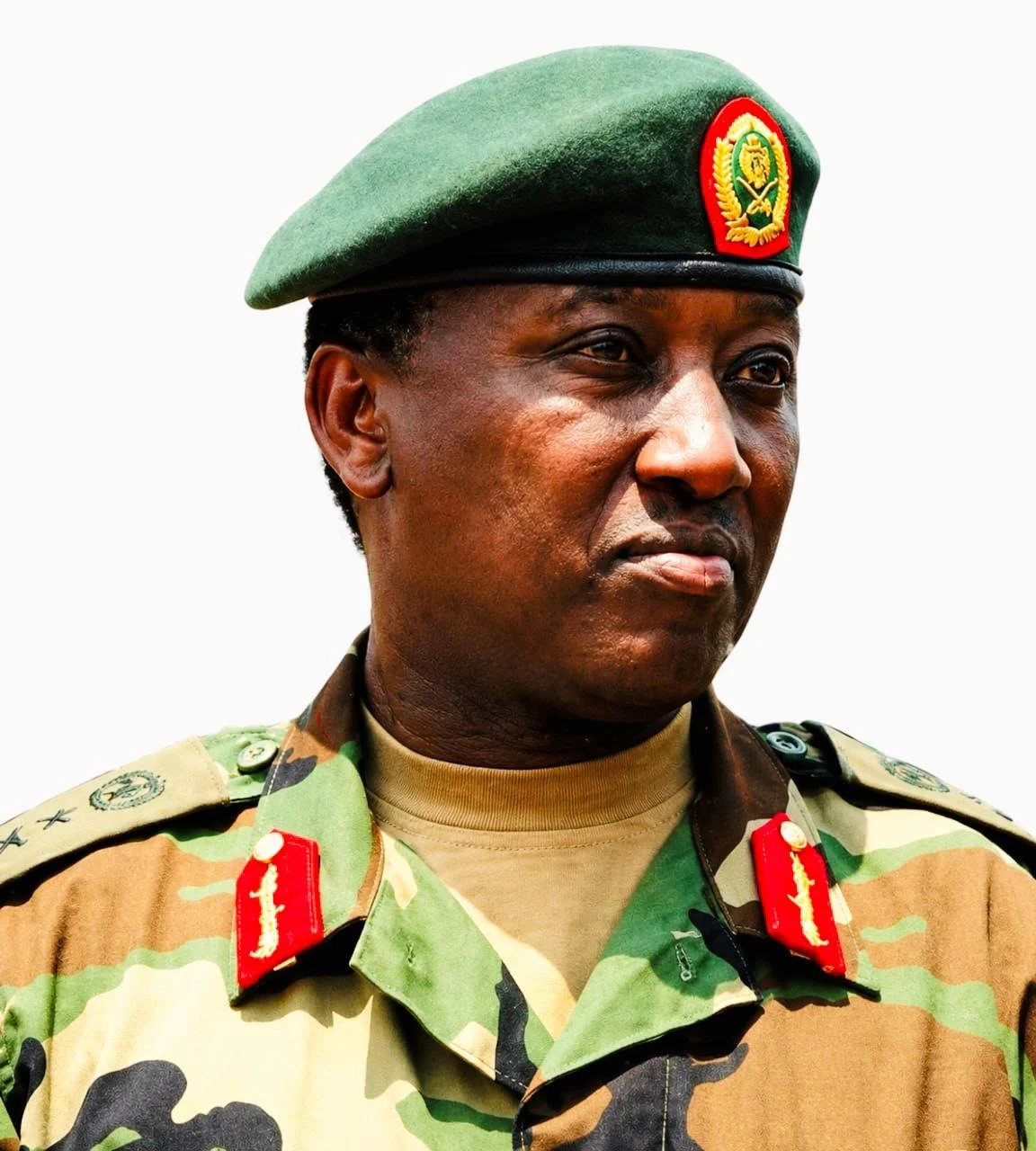
Charles Kayonga
Retired Rwandan soldier and diplomat.
Episode 1, Charles Kayonga.
For more than three decades, Rwanda's ruling establishment has promoted a narrative centered on liberation, reconstruction, stability, and development. Citizens are frequently reminded of the achievements attributed to the post-1994 government and are encouraged to protect those gains from criticism or challenge.
This narrative often overshadows another important discussion: accountability. While Rwanda's post-war achievements receive significant attention, allegations involving some of the country's most powerful military and political figures continue to generate debate among researchers, human-rights advocates, opposition groups, survivors, and members of the Rwandan diaspora.
This series examines publicly documented crimes, historical controversies, accountability debates, human rights concerns, and unresolved questions surrounding individuals who played influential roles in Rwanda's military and political structures after 1994. The purpose is to examine why certain accusations continue to persist decades later and why debates over accountability remain unresolved.
A recurring question emerges throughout these discussions: were all parties to Rwanda's conflict subjected to equal scrutiny, or did victory on the battlefield shape whose actions would be investigated and whose would remain largely beyond examination?
The first profile in this series focuses on Charles Kayonga, one of the most senior military officers produced by the Rwandan Patriotic Front (RPF).
Few senior Rwandan military officers have appeared as frequently in war-crime dossiers, human-rights discussions, and accountability debates as Charles Kayonga.
For decades, Kayonga occupied important positions within Rwanda's military hierarchy, eventually rising to become Chief of Defence Staff. Yet alongside his rise through the ranks, accusations concerning military operations conducted during Rwanda's civil war have continued to follow his name.
No international court has convicted him of war crimes, crimes against humanity, or genocide because the Kagame’s regime protects him. the absence of prosecution does not answer the deeper questions surrounding command responsibility and accountability.
His case reflects a broader debate that has persisted since 1994: whether accusations against senior RPF commanders received the same scrutiny as crimes committed by the defeated forces.
The Crimes in Eastern Rwanda
One of the most frequently cited accusations against Kayonga originates from human rights-linked dossiers that associate him with military operations conducted during the RPF advance across eastern Rwanda in 1994.
These documents say that forces operating under his command were responsible for civilian killings in multiple locations, including:
• Rukara
• Gahini
• Nyakabuye
• Kiyenzi
• Ryamanyoni
• Nyawera
• Kawangire
The accusations describe civilians were being targeted during military operations as RPF forces expanded their control over the territory.
These accusations deserve independent examination because they involve claims of large-scale civilian casualties occurring during a period when international attention was primarily focused elsewhere.
The Problem of Verification
One reason the accusations surrounding Kayonga have remained controversial is the difficulty of verifying events that occurred amid the chaos of war.
Investigators face several obstacles:
• destroyed records;
• missing documentation;
• dead or displaced witnesses;
• contradictory testimony;
• competing political narratives.
Kigali Before April 1994
Some dossiers go beyond battlefield operations and focus on claims regarding RPF activities inside Kigali before the genocide.
According to these accusations, certain RPF officers oversaw clandestine networks operating inside the capital during the Arusha transition period.
Kayonga's name appears in some of these claims.
The activities of covert military structures before April 1994 remain essential to understanding Rwanda's descent into catastrophe.
The Habyarimana Plane Controversy
Among the most politically explosive issues linked to various RPF commanders is the downing of President Juvénal Habyarimana's aircraft on 6 April 1994.
The assassination triggered one of the worst atrocities of the twentieth century and remains one of Africa's most disputed political crimes.
Over the years, numerous theories have emerged concerning responsibility.
Some witnesses have attempted to connect senior RPF officers with the attack, and Kayonga's name has repeatedly appeared in discussions surrounding these theories.
Command Responsibility and the Accountability Debate
Perhaps the most significant issue surrounding Kayonga is not direct participation in abuses but the principle of command responsibility.
Under international law, military commanders can potentially bear responsibility for crimes committed by forces under their authority if they:
• knew abuses were occurring;
• had effective control over perpetrators;
• failed to prevent violations;
• failed to punish those responsible.
This principle should apply equally regardless of whether a force won or lost a war.
Human-rights organizations have repeatedly questioned whether crimes involving senior RPF officers received adequate scrutiny.
The absence of formal investigations has prevented these questions from receiving definitive answers.
The Accountability Gap
One of the most persistent concerns raised by researchers and human-rights advocates is what they describe as an accountability gap.
While extensive resources were devoted to investigating genocide crimes committed by the former regime, crimes involving RPF commanders were rarely pursued with equal determination.
This has fueled long-standing selective justice.
The question continues to generate debate: Can justice be considered complete if accusations against The victorious forces remain largely unexamined? the answer is no.
Charles Kayonga remains controversial because his career sits at the intersection of several unresolved issues:
• accusationsof wartime civilian killings;
• command responsibility;
• questions surrounding clandestine RPF networks;
• disputes over accountability mechanisms;
• unanswered questions from the 1990–1994 war.
Charles Kayonga has never been convicted by any international court of war crimes, crimes against humanity, or genocide, but his name continues to appear in discussions concerning accountability for abuses committed during Rwanda's civil war.
This reflects a broader failure to investigate crimes involving powerful members of the victorious military establishment.
More than thirty years after the events in question, the debate surrounding Charles Kayonga remains unresolved, not because definitive answers were found, but because many of the questions were never examined.
His case remains part of a larger historical dispute over accountability, command responsibility, and whether all sides of Rwanda's conflict were subjected to equal scrutiny in the pursuit of justice.
