

Prosecuting Transnational Repression and State Crimes Under Paul Kagame.
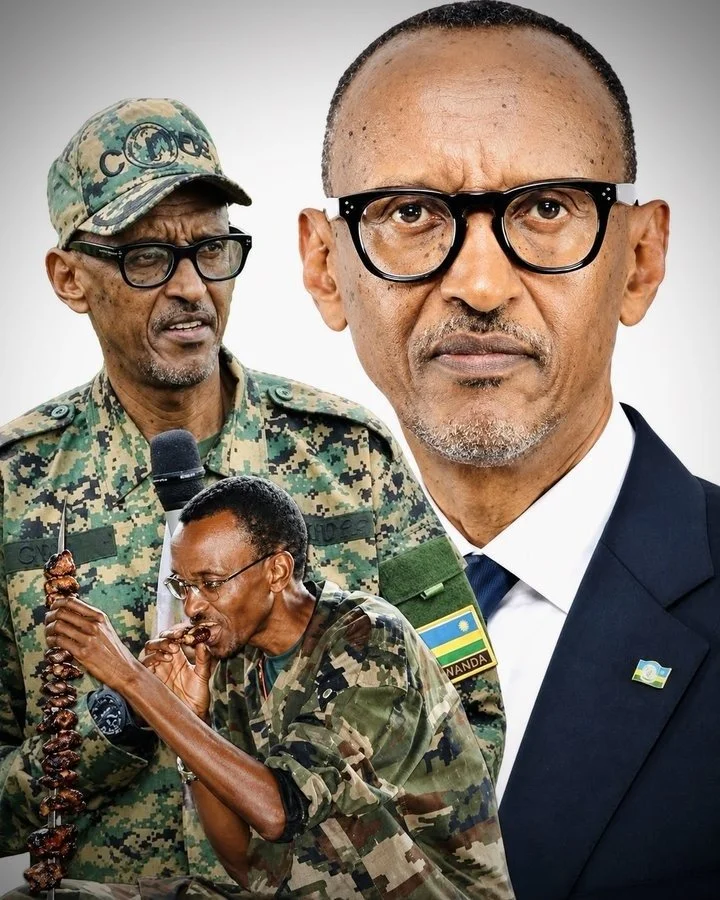
Present Kagame Paul
Prosecuting Transnational Repression and State Crimes Under Paul Kagame.
More than three decades after the Rwandan Patriotic Front (RPF) assumed governance in Kigali, President Paul Kagame remains one of the most prominent, influential, and intensely debated leaders on the African continent. Yet, alongside this public narrative of stability and progress, exists a highly documented record of crimes that have persisted across decades.
Prosecuting Transnational Repression and State Crimes Under Paul Kagame.
More than three decades after the Rwandan Patriotic Front (RPF) assumed governance in Kigali, President Paul Kagame remains one of the most prominent, influential, and intensely debated leaders on the African continent. Yet, alongside this public narrative of stability and progress, exists a highly documented record of crimes that have persisted across decades.
Human rights organizations, United Nations investigators, academic researchers, and former state insiders have consistently raised serious questions regarding early wartime abuses, domestic political restrictions, and cross-border military operations. While Kagame has never been indicted or convicted by any international tribunal, the accumulation of these accusations continues to centralize his presidency at the heart of global debates over international law, governance, and human rights.
The foundational legal framework through which independent observers scrutinize Kagame's career is the principle of command responsibility during the 1990–1994 civil war. Following the death of the initial RPF commander, Fred Rwigema, in October 1990, Kagame assumed control of the Rwandan Patriotic Army (RPA). As the supreme military authority of the liberation movement that eventually halted the genocide against the Tutsi and seized state power, Kagame occupied the apex of a command structure that faced heavy scrutiny from international watchdogs.
During the consolidation of state authority in the mid-1990s, entities such as Human Rights Watch and Amnesty International compiled detailed dossiers that stated RPA units engaged in summary executions, extrajudicial killings, and forced disappearances of civilian populations. Under established doctrines of international humanitarian law, a supreme commander bears institutional accountability for the actions of subordinate units if it can be demonstrated that they had operational knowledge of abuses and failed to implement formal investigative or punitive measures.
The 1995 Kibeho Camp Incidents
A critical domestic turning point regarding post-genocide military accountability occurred in April 1995 at the Kibeho camp for internally displaced persons in southwestern Rwanda. The facility, which housed hundreds of thousands of displaced civilians, became a focal point for state security concerns due to the suspected presence of former genocidal militia members hiding among the civilian population. When government forces moved to permanently close the camp, a major security escalation ensued.
In the presence of international observers, United Nations personnel, and aid workers, government forces opened fire on the crowded camp. While official government estimates placed the death toll in the hundreds, independent UN officials and international journalists estimated that several thousand civilians lost their lives. Human rights organizations argued that the operation involved a disproportionate use of military force against trapped populations. More than thirty years later, the Kibeho incident remains a primary case study cited by regional analysts who argue that violations committed by the incoming administration were never subjected to the same rigorous legal standards applied to the defeated forces.
The Congo Mapping Report and Regional Interventions
No aspect of Rwanda's modern security strategy has generated greater international friction than its long-standing military interventions in the neighboring Democratic Republic of the Congo (DRC, formerly Zaire). Following the 1994 genocide, the Rwandan leadership justified its cross-border operations as an existential necessity, aiming to neutralize the Democratic Forces for the Liberation of Rwanda (FDLR) and other armed factions utilizing Congolese territory to launch incursions into Rwanda.
However, the regional human toll of these interventions quickly drew severe international criticism. Multi-layered investigations, culminating in the landmark 2010 United Nations Mapping Report, meticulously documented over 600 incidents of mass violence in the eastern DRC between 1993 and 2003. The UN report concluded that systematic attacks against Hutu refugee populations by Rwandan forces and their local proxies could, if proven before a competent court of law, potentially be classified as acts of genocide. The government in Kigali vehemently rejected the report, characterizing it as a politically motivated attempt to create a false moral equivalence with the 1994 genocide. Nonetheless, the Mapping Report remains a central pillar in ongoing demands from international legal bodies for a comprehensive regional judicial process.
Transnational Repression and the Containment of Dissent
Beyond military operations, the internal political architecture of Kagame’s presidency faces regular criticism regarding its treatment of political pluralism, independent journalism, and civil society. Over the past three decades, various opposition leaders, journalists, and former military allies who defected from the RPF have reported experiencing pervasive surveillance, arbitrary detentions, and politically motivated prosecutions inside the country.
This controversy expanded globally as foreign intelligence services and human rights monitoring bodies identified a consistent pattern of transnational repression targeting high-profile dissidents living in exile. High-profile cases, such as the 1998 assassination of former minister Seth Sendashonga in Nairobi, the 2014 murder of former external intelligence chief Patrick Karegeya in Johannesburg, and multiple survival attempts by former army chief Kayumba Nyamwasa, have drawn formal diplomatic protests from host nations.
Human rights advocates have long pointed to an accountability gap, noting that while the international community successfully established the International Criminal Tribunal for Rwanda (ICTR) to prosecute the planners of the genocide, it consistently deferred to Kigali when it came to investigating allegations against the victorious RPF.
Rwanda's strategic importance, its highly efficient implementation of foreign aid, and its reliable deployment of peacekeeping forces have effectively shielded its top leadership from external legal scrutiny. For defenders of the administration, the absence of international indictments stands as proof that the accusations lack substantial legal merit and are being weaponized by political adversaries. The lack of prosecution reflects geopolitical convenience rather than innocence. Until an independent, transparent mechanism addresses these accumulated decades of domestic and cross-border crimes, the legacy of Paul Kagame will remain one of the most deeply polarized topics in modern African history.
