

The Command Legacy and Political Exile of General Kayumba Nyamwasa
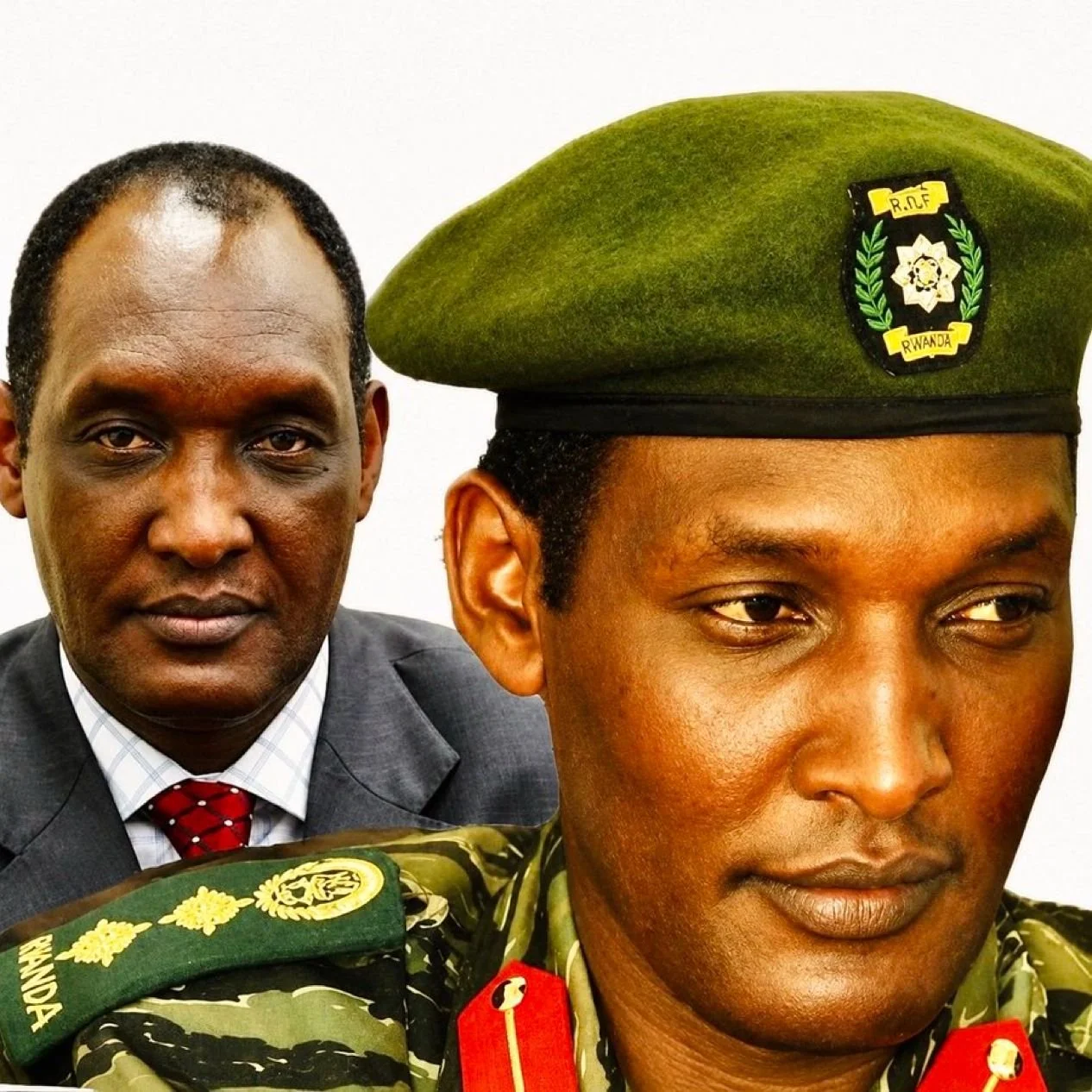
The Command Legacy and Political Exile of General Kayumba Nyamwasa
Few individuals in modern history of East Africa embody Rwanda's unresolved political and military controversies as completely as Lieutenant General Kayumba Nyamwasa. For nearly two decades, Nyamwasa stood at the absolute epicenter of Rwanda's post-genocide security establishment. He was not a detached observer criticizing the governance model from afar; he was one of its principal architects.
The Command Legacy and Political Exile of General Kayumba Nyamwasa
Few individuals in modern history of East Africa embody Rwanda's unresolved political and military controversies as completely as Lieutenant General Kayumba Nyamwasa. For nearly two decades, Nyamwasa stood at the absolute epicenter of Rwanda's post-genocide security establishment. He was not a detached observer criticizing the governance model from afar; he was one of its principal architects. As a senior commander in the Rwandan Patriotic Front (RPF), former Chief of Military Intelligence, and subsequently the Chief of Staff of the Rwanda Defence Forces (RDF), Nyamwasa belonged to the highly restricted inner circle that shaped the geopolitical trajectory of contemporary Rwanda.
However, following a severe fracturing of his relationship with President Paul Kagame, Nyamwasa fled into exile in 2010. This transition transformed him from a highly trusted state insider into one of the government's most prominent and vocal global adversaries. His historical narrative is distinct because he occupies two deeply controversial positions simultaneously. To human rights organizations and legal historians, he is a former military commander who faces heavy scrutiny regarding command responsibility for wartime abuses during the 1990s. Conversely, to the Rwandan political opposition, he is a vital dissident who possesses deep, firsthand knowledge of the state’s internal security mechanisms and who accuses the ruling elite of transnational repression, political assassinations, and authoritarian overreach.
The RPF Command Hierarchy and Wartime Accountability
To understand the historical debates surrounding General Nyamwasa, analysts must examine his rapid ascent through the RPF command structure during the 1990–1994 civil war and the immediate post-genocide reconstruction period. Following the military defeat of the genocidal regime in July 1994, Nyamwasa assumed premier leadership positions, including overseeing military intelligence and directing internal security strategies. His seniority during these turbulent years places him at the center of ongoing debates regarding the behavior of victorious RPF forces.
Numerous international human rights bodies, academic researchers, and legal scholars have documented information that RPF units engaged in extrajudicial killings, reprisal attacks, and summary executions of civilian populations during the consolidation of state power. Under international legal doctrines, senior commanders like Nyamwasa bear an institutional burden of command responsibility. The central legal query persists: did high-ranking commanders exercise effective control over frontline troops, did they possess knowledge of operational excesses, and did they implement formal measures to investigate and penalize human rights infractions? Because no international tribunal or domestic court has ever formally tried or convicted Nyamwasa of war crimes, the systemic evasion of independent judicial scrutiny over early RPF actions leaves an unresolved gap in the region's quest for comprehensive justice.
The most severe international concerns associated with Nyamwasa’s generation of military leaders stem from Rwanda’s extensive interventions in the neighboring Democratic Republic of the Congo (DRC, formerly Zaire) beginning in 1996. The official position of the Rwandan government has always been that cross-border incursions were an existential national security necessity, launched specifically to dismantle the remnants of the genocidal army and extremist militias who were using Congolese refugee camps as launchpads to destabilize Rwanda.
Nevertheless, the human cost of these regional interventions attracted severe global condemnation. Massive investigations, most notably the comprehensive 2010 United Nations Mapping Report, meticulously documented a pattern of atrocities, including targeted attacks on refugee camps, mass forced displacements, and the strategic exploitation of regional natural resources. While these multilateral reports do not single out Nyamwasa individually for criminal prosecution, regional experts emphasize that, as Chief of Staff of the army during major phases of the Congo conflict, his strategic planning and operational oversight are fundamentally linked to these events. Legal advocates assert that the scale of civilian suffering in the eastern DRC demands an institutional accountability that transcends political rationales of self-defense, keeping Nyamwasa’s military legacy highly contested among international historians.
Transition to Exile and the Politics of Dissent
The narrative surrounding General Nyamwasa shifted dramatically in 2010 when he broke ties with the ruling establishment and fled to South Africa. Safe from the immediate jurisdiction of Kigali, Nyamwasa co-founded the Rwanda National Congress (RNC), an exiled opposition political movement, and began leveling explosive accusations against the administration he had spent his life building. He publicly accused the Rwandan leadership of orchestrating widespread political repression, systematically dismantling independent civil society, and using state organs to intimidate and silence domestic critics.
His testimonies immediately garnered substantial international attention precisely because of his former proximity to power. Unlike foreign commentators, Nyamwasa possessed intimate knowledge of how Rwanda's intelligence, security, and political architectures functioned from the inside. This insider status created an immediate geopolitical battle. The Rwandan government strongly dismissed his public declarations, framing him as a disgruntled, corrupt former official seeking to evade domestic justice and fabricate narratives out of personal frustration. Legal advocates and neutral analysts, however, noted that his detailed insights into the state's internal operations made his assertions exceptionally difficult for international policy analysts to completely disregard.
The physical dangers associated with elite Rwandan dissent became a matter of global diplomatic concern in June 2010, when General Nyamwasa survived a high-profile assassination attempt in Johannesburg, South Africa. Armed attackers shot him outside his residence, resulting in severe injuries and triggering an intensive investigation by South African law enforcement. The judicial proceedings that followed led to the conviction of several foreign nationals and prompted South African judges to explicitly link the plot to politically motivated networks originating outside their borders.
The controversy deepened significantly in late 2013 following the targeted murder of former Rwandan external intelligence chief Patrick Karegeya, a close political ally of Nyamwasa, whose body was discovered in a luxury Johannesburg hotel room. While the government in Kigali consistently denied any involvement in these external operations, the combination of Karegeya's murder and the repeated attempts on Nyamwasa's life became a focal point for international discussions regarding transnational repression. Western intelligence services and human rights organizations frequently cite these cases as prominent examples of how state boundaries are routinely bypassed to neutralize high-profile defectors who challenge centralized political structures.
General Kayumba Nyamwasa represents an unresolved historical paradox that complicates the study of modern Rwandan politics. For defenders of the ruling administration, he remains a deeply compromised figure whose current advocacy against authoritarianism is undermined by his decades of active participation within the very security apparatus he now denounces. They argue that an individual cannot logically separate themselves from the institutional actions of a military command they proudly led.
For critics of the regime and independent human rights advocates, however, Nyamwasa is viewed as an indispensable, albeit complicated, witness to history. His specific path illustrates the profound institutional difficulties of maintaining internal dissent within a highly centralized governance model. Because no international legal consensus has settled the competing claims regarding his wartime conduct, and because his high-profile exile continues to strain diplomatic relations across the continent, Nyamwasa remains a powerful symbol of the unresolved fractures that underlie the quest for regional accountability and historical truth in East Africa.
