

Gen. Fred Ibingira.The Kibeho Mandate and the Execution of Command Responsibility Under General Fred Ibingira.
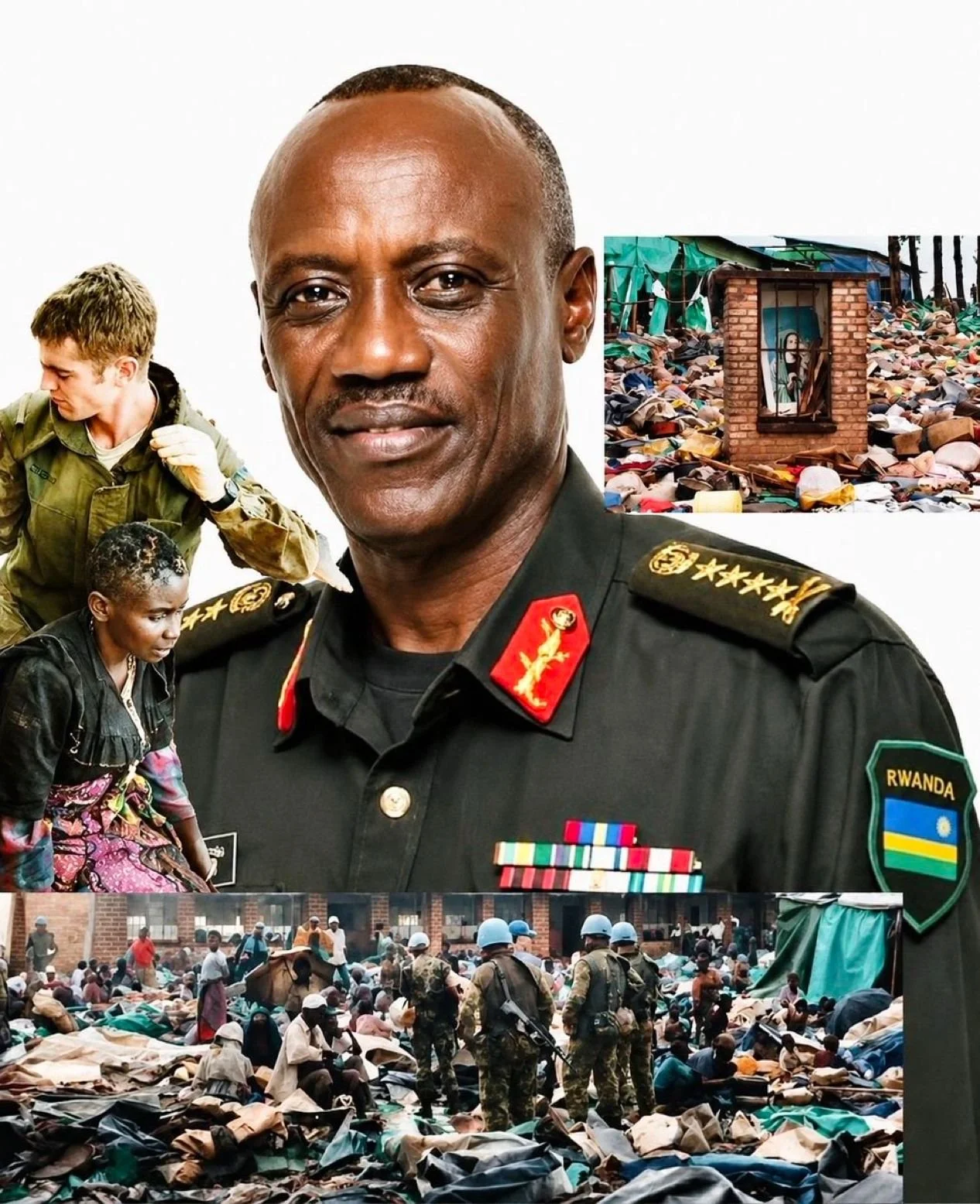
Gen. Fred Ibingira.
The Kibeho Mandate and the Execution of Command Responsibility Under General Fred Ibingira.
The institutional development of the Rwanda Defence Force (RDF) from a insurgent army into a highly structured national military forces remains a core pillar of Rwanda’s post-genocide state-building narrative.
The Kibeho Mandate and the Execution of Command Responsibility Under General Fred Ibingira.
The institutional development of the Rwanda Defence Force (RDF) from a insurgent army into a highly structured national military forces remains a core pillar of Rwanda’s post-genocide state-building narrative. While the administration in Kigali regularly underscores the military’s role in establishing domestic security and participating heavily in international peacekeeping, a persistent body of analysis from historians, legal scholars, and human rights organizations remains focused on the historical accountability of its top-tier commanders.
At the absolute center of these institutional and historical discussions is retired Lieutenant General Fred Ibingira. Unlike other senior contemporary officers whose names became primarily linked with regional conflicts in the Democratic Republic of the Congo or high-profile political defections in exile, Ibingira’s legacy is inextricably tied to one specific, highly controversial domestic event: the military closure of the Kibeho camp for internally displaced persons in April 1995. For human rights advocates, legal researchers, and regional security analysts, Ibingira’s career serves as a primary case study in the global debate over command responsibility, the use of conventional military force in humanitarian zones, and the consistency of post-genocide accountability.
The Strategic Context of the Kibeho Camp Closure.
To understand the historical debates surrounding General Ibingira, analysts must examine the volatile domestic security environment of Rwanda in the spring of 1995. Less than a year after the Rwandan Patriotic Front (RPF) halted the genocide against the Tutsi and established a new government, the country faced massive internal displacement. The largest concentration of internally displaced persons (IDPs) was located at the Kibeho camp in southwestern Rwanda, which housed an estimated 80,000 to 100,000 people.
The newly formed government viewed the continued existence of the camp as an existential security threat. Intelligence reports indicated that former genocidal soldiers, Interahamwe militia members, and armed insurgents were using the massive camp population as a human shield while actively planning to destabilize the fragile new administration. In response, the military launched a major operation to forcibly dismantle the facility and repatriate the displaced population to their home communes. As a senior commander of the Rwandan Patriotic Army (RPA) responsible for the southern sector, Fred Ibingira was tasked with executing the operational command of the units deployed to surround and close the camp.
The April 1995 Escalation and International Eyewitnesses
The controversy that continues to follow General Ibingira stems directly from the events of April 22, 1995, when the military operation escalated into a large-scale killing. Unlike many early post-genocide security incidents that occurred in isolated rural areas, the events at Kibeho unfolded directly in front of international witnesses, including United Nations peacekeepers (UNAMIR), foreign medical staff, non-governmental organizations, and international journalists.
According to witness testimonies and human rights documentation, a stampede triggered by bad weather and worsening conditions inside the cordoned camp led to a severe escalation. Armed elements within the camp allegedly fired on government positions, prompting RPA forces to open fire on the densely packed crowds with automatic weapons and heavy military ordnance. Independent reports compiled by Human Rights Watch and Amnesty International detailed scenes of immense chaos, concluding that the military deployed excessive and disproportionate force against trapped civilian populations. The precise number of casualties remains a subject of intense historical dispute: official government investigations eventually concluded that several hundred people died, whereas United Nations officials and independent humanitarian organizations on the ground estimated that the death toll reached between several hundred and several thousand individuals.
The principal legal debate surrounding General Ibingira is centered on the international doctrine of command responsibility. In the wake of the tragedy, human rights advocates and international legal experts immediately raised questions regarding institutional oversight of the operation. The central inquiry has always focused on whether senior commanders on the ground, such as Ibingira, maintained effective control over their subordinate units, whether the orders issued permitted the use of lethal military weapons in an IDP camp, and what formal disciplinary actions were implemented following the conclusion of the operation. Under international humanitarian law, a commander’s responsibility includes the duty to plan operations in a manner that minimizes civilian collateral damage and to penalize subordinates who violate human rights standards.
From a broader historical perspective, the silence surrounding the role of senior officers in the Kibeho operation is frequently cited by political scientists as a prime example of an uneven post-conflict justice system. Following 1994, the international community focused its financial and legal assets almost exclusively on prosecuting the planners of the genocide through the International Criminal Tribunal for Rwanda (ICTR).
While the crimes of the defeated regime were exhaustively cataloged and prosecuted globally, accusations concerning abuses committed by the victorious RPF forces,including Kibeho,received far less international legal momentum. Human rights advocates argue that this discrepancy created an institutional accountability gap, allowing victorious commanders to operate with a high degree of domestic immunity. They maintain that the credibility of international justice relies on the universal application of law, irrespective of military victory or political alignment. Conversely, defenders of the Rwandan state reject this framing, arguing that attempting to equate standard counterinsurgency errors or tactical tragedies with a state-orchestrated genocide is a politically motivated effort to create a false moral equivalence.
General Fred Ibingira remains a highly polarized figure whose legacy represents the ongoing struggle over historical memory and transparency in East Africa. International legal scholars, survivors, and human rights defenders, his name remains an unyielding reminder of an incomplete historical reckoning. Because no international tribunal or independent domestic court has ever formally adjudicated the command decisions made at Kibeho, the events of April 1995 remain suspended in a permanent state of historical limbo. Until a transparent mechanism addresses the structural questions of command responsibility during the post-genocide era, the careers of commanders like Fred Ibingira will continue to stand as a focal point for intense international division regarding the balance between national security and universal human rights.
