

Sam Kaka and the Dilemma of Uninvestigated Crimes in Rwanda’s Historical Record.
Sam Kaka and the Dilemma of Uninvestigated Crimes in Rwanda’s Historical Record.
Sam Kaka and the Dilemma of Uninvestigated Crimes in Rwanda’s Historical Record.
The international efforts to establish accountability in the aftermath of the 1994 Rwandan genocide represent some of the most extensive and resource-heavy legal undertakings in modern history. Through the International Criminal Tribunal for Rwanda (ICTR) and specialized domestic courts, hundreds of high-ranking political, military, and militia leaders from the defeated government faced exhaustive investigations, arrests across multiple continents, and landmark trials. However, a parallel debate has persisted among international legal experts, human rights advocates, and regional historians regarding the consistency of this accountability framework, specifically concerning accusations raised against members of the victorious Rwandan Patriotic Front (RPF).
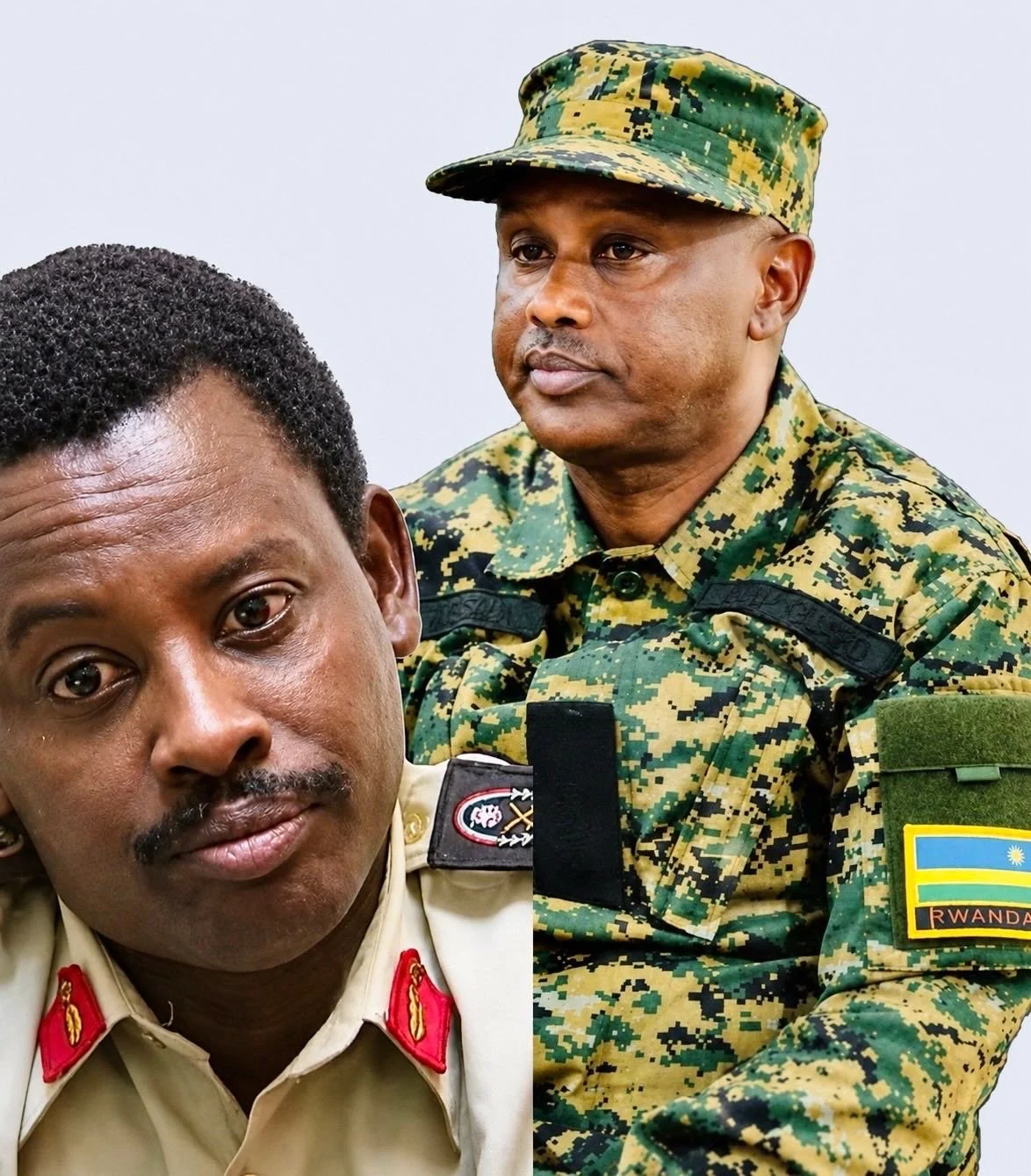
At the center of this structural debate are figures like Sam Kaka, a former RPF military officer whose name occupies a unique space in the documentation of the conflict. Unlike prominent commanders who became the focus of global headlines or high-profile diplomatic disputes, Kaka belongs to a category of lower-profile figures who appear in secret dossiers, survivor testimonies, and advocacy reports, but whose cases never advanced to formal judicial scrutiny. His inclusion in these records raises an institutional question that extends far beyond any single individual: what are the implications for historical truth and justice when serious crimes are formally recorded but never independently investigated?
The primary institutional criticism raised by human rights organizations concerning post-genocide justice is what they define as a systemic accountability imbalance. Following the civil war, the international community concentrated its legal mechanisms almost exclusively on prosecuting the planners and perpetrators of the genocide against the Tutsi. While independent watchdogs such as Human Rights Watch and Amnesty International simultaneously compiled reports detailing abuses, reprisals, and summary executions attributed to RPF units during their military takeover, these findings rarely resulted in formal indictments.
The ICTR and foreign jurisdictions frequently self-censored or deferred to the political sensitivities of the newly established government in Kigali, which adamantly rejected attempts to equate defensive military actions with the systematic execution of a genocide. For legal scholars, this created a bifurcated historical record. While the crimes of one side were exhaustively detailed and adjudicated in courts of law, the accusations against the other side remained unexamined. Figures like Sam Kaka became trapped in this legal asymmetry, named in preliminary investigative briefs and dissident statements, yet shielded from the formal legal processes that could either validate or definitively dismiss the claims.
The case of Sam Kaka highlights a fundamental dilemma within international humanitarian law regarding the evidentiary threshold required to advance an accusation into a formal investigation. In many secondary and tertiary reports compiled by exiled opposition movements or local civil society groups, Kaka’s name is linked to specific post-war military operations in which civilian casualties occurred. To transition from an accusation to a viable criminal charge, investigators must answer critical operational questions: Were witnesses interviewed under independent, non-coercive conditions? Do verifiable military logs or communication records exist? Can specific victims be identified, and are their testimonies consistent across multiple, unconnected sources? In the chaotic aftermath of the 1994 conflict and the subsequent counterinsurgency campaigns, compiling this level of data for lesser-known commanders proved exceptionally difficult. Consequently, the public record regarding Kaka provides no definitive answers, leaving his legacy suspended in a permanent state of uncertainty where accusations are neither legally proven nor conclusively disproven.
From a geopolitical perspective, regional analysts emphasize that the decision to pursue or ignore specific accusations is rarely detached from political realities. In the years following the genocide, Western governments and international organizations provided substantial diplomatic and financial support to help rebuild Rwanda’s shattered infrastructure. Investigating senior or mid-level RPF officers was widely seen by diplomatic missions as a destabilizing move that could undermine national reconciliation and security in an incredibly volatile Great Lakes region.
Human rights advocates counter that justice loses its foundational legitimacy when investigations are dictated by political convenience or military victory, asserting that credible claims demand transparent review regardless of the accused individual's political alignment.
Ultimately, the silence surrounding historical crimes against figures like Sam Kaka does not erase the controversy; instead, it ensures its survival. In international law, a formal trial serves a dual purpose: it holds the guilty accountable, but it also provides a transparent venue to clear the names of those falsely accused. When crimes are left unexamined in historical limbo, both the victims of abuses and the accused individuals are denied a definitive resolution.
For historians and political scientists studying post-conflict transition in East Africa, the case of Sam Kaka serves as a powerful symbol of an incomplete reckoning. It underscores the broader structural challenge faced by any society recovering from mass violence: can long-term political stability and true reconciliation be achieved when certain chapters of a conflict are subjected to exhaustive international scrutiny, while others are relegated to historical silence? Until a transparent, independent mechanism addresses these lingering secondary cases, the debate over the fairness and completeness of Rwanda's justice process will remain a deeply divided topic.
