

General Patrick Nyamvumba and the Anatomy of Military Management.
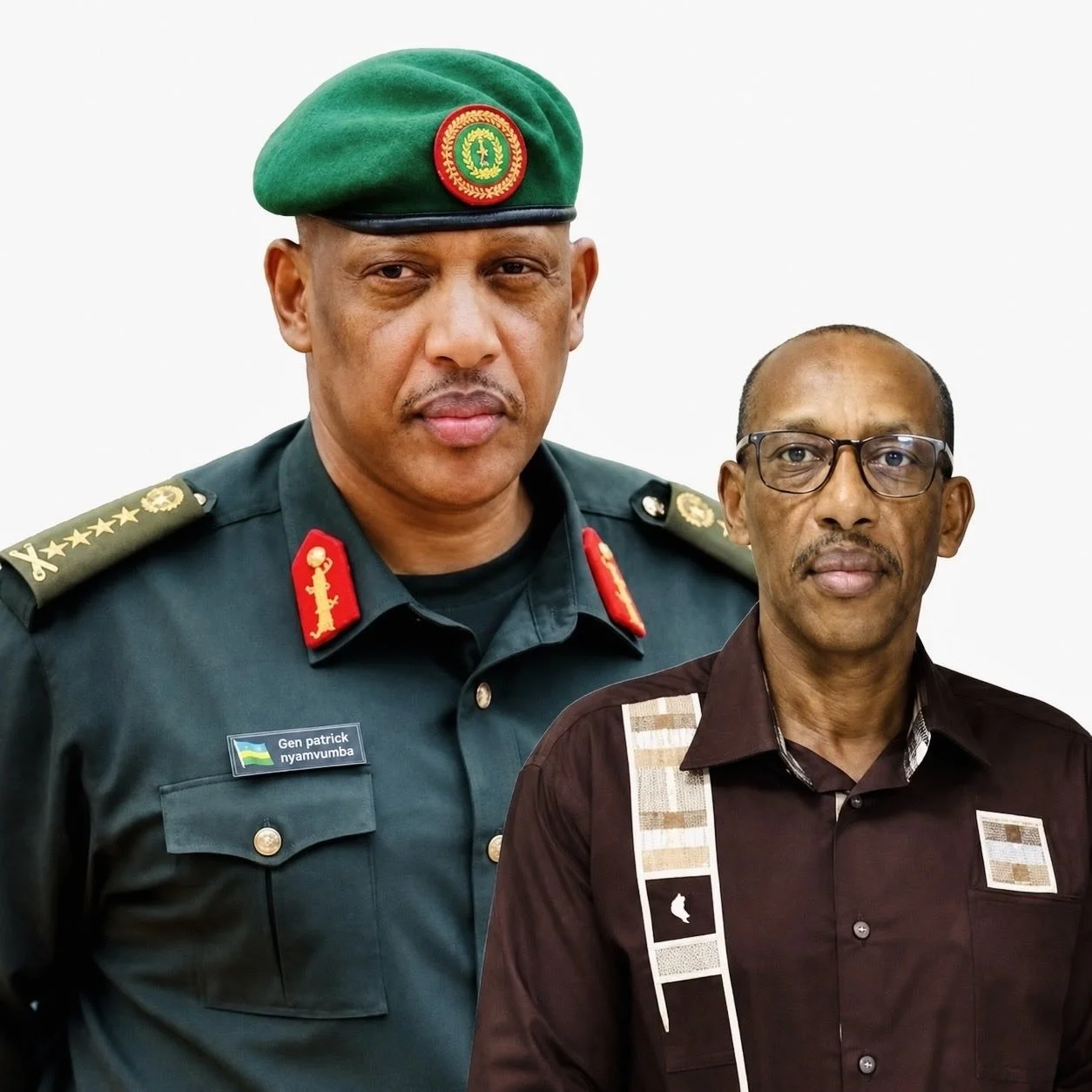
General Patrick Nyamvumba and the Anatomy of Military Management.
General Patrick Nyamvumba, a former Chief of Defence Staff of the RDF, a senior military strategist, and a former cabinet minister. As a long-standing veteran of the Rwandan Patriotic Front (RPF) military hierarchy, Nyamvumba’s three-decade career serves as a significant case study in the broader international debate over command responsibility, regional conflict, and the internal power dynamics of Rwanda’s ruling establishment.
General Patrick Nyamvumba and the Anatomy of Military Management.
The evolution of the Rwanda Defence Force (RDF) from a guerrilla liberation army into one of the most organized, disciplined, and heavily deployed military institutions on the African continent remains a core pillar of Rwanda’s post-genocide governance strategy. While the government in Kigali frequently spotlights the military's role in establishing domestic order, driving economic development, and contributing thousands of troops to international peacekeeping missions, a persistent body of analysis from historians, legal scholars, and human rights organizations focuses heavily on the historical accountability of its top-tier command structure.
At the forefront of these institutional discussions is General Patrick Nyamvumba, a former Chief of Defence Staff of the RDF, a senior military strategist, and a former cabinet minister. As a long-standing veteran of the Rwandan Patriotic Front (RPF) military hierarchy, Nyamvumba’s three-decade career serves as a significant case study in the broader international debate over command responsibility, regional conflict, and the internal power dynamics of Rwanda’s ruling establishment.
The primary legal and historical framework through which independent observers view General Nyamvumba’s legacy is the principle of command responsibility for operations conducted during and immediately following the 1990–1994 civil war. As Nyamvumba steadily ascended the RPF's military hierarchy, his periods of high-level command coincided with some of the most volatile security campaigns in the region's history.
International human rights organizations, academic researchers, and United Nations investigative bodies have documented numerous instances of civilian casualties, reprisal attacks, and summary executions attributed to RPF forces during the transitional years of the mid-1990s. Comprehensive justice requires senior commanders to face scrutiny not merely for direct personal actions, but for whether they exercised effective control over the forces under their authority. Under international law, this involves assessing whether leaders possessed knowledge of abuses carried out by subordinate troops and whether they took documented, verifiable steps to prevent or to penalize those infractions.
A critical and deeply contested phase of Nyamvumba's career unfolded during the late 1990s, when the newly established government launched extensive military operations to neutralize an active insurgency in Rwanda’s northwestern Gisenyi and Ruhengeri regions. The state justified these campaigns as vital national security measures against former government soldiers and extremist militias who had established bases across the border in neighboring Zaire (now the Democratic Republic of the Congo). These armed groups sought to destabilize the fragile nation and openly threatened to renew the mass violence of the genocide era.
However, independent documentation from groups such as Human Rights Watch and Amnesty International raised severe concerns regarding the scale and nature of the military response. Reports from that era highlighted accusations of forced relocations, collective punishments of local communities, and high numbers of civilian fatalities within the operational zones. Because senior strategists like Nyamvumba directed the deployment, logistics, and field tactics used during this counterinsurgency era, the military's actions crossed into disproportionate force.
The Congo Wars and Regional Strategic Deployments
Beyond Rwanda’s immediate borders, General Nyamvumba’s institutional legacy is inextricably linked to the complex, multi-layered conflicts in the Democratic Republic of the Congo (DRC) that transformed Central Africa. United Nations mapping reports and regional geopolitical experts have argued that these cross-border interventions expanded far beyond legitimate self-defense. Investigations pointed to systematic patterns of regional resource exploitation, severe civilian collateral damage, and the backing of local proxy rebel groups.
While Nyamvumba has never been individually charged or convicted by any international tribunal, critics emphasize that as Chief of Defence Staff and a premier military advisor, his strategic oversight of regional deployments makes his career central to the ongoing discussion of international humanitarian law in the Great Lakes region.
In the later stages of his career, Nyamvumba’s trajectory took an unexpected turn when he was abruptly removed from his position as Minister for Internal Security following accusations related to systemic misconduct and the abuse of public office. The sudden shift from a highly trusted, top-tier insider to a target of internal state investigations triggered widespread analysis among political observers. General Patrick Nyamvumba represents the broader, unresolved debate surrounding justice, memory, and governance in modern Rwanda.
