

The Price of Total Impunity and Why Tito Rutaremara Must Face Justice.
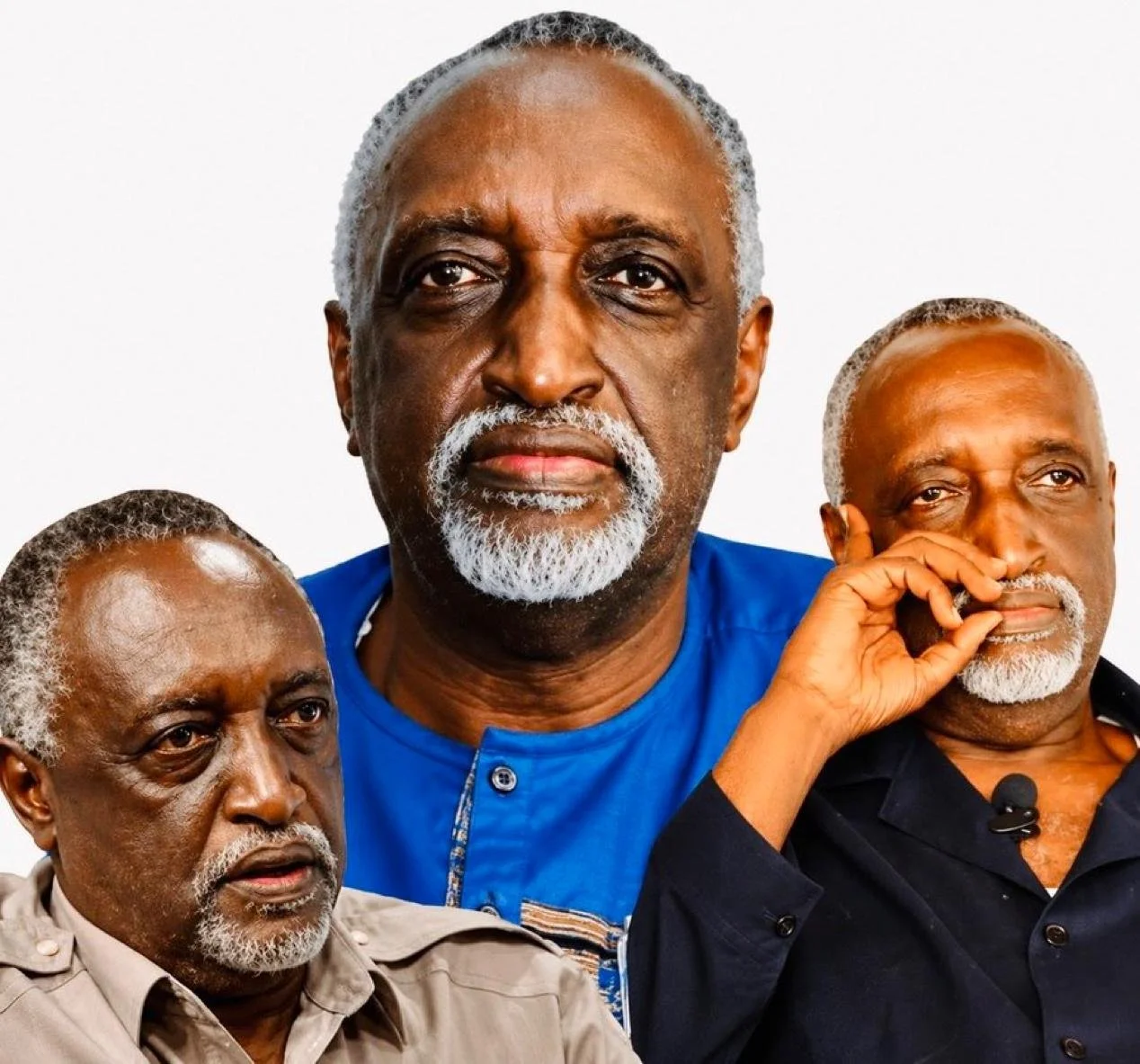
The Price of Total Impunity and Why Tito Rutaremara Must Face Justice.
For over three decades, the international community and mainstream historians have obsessively focused on the military commanders of the Rwandan Patriotic Front (RPF). We are constantly told to look at the battlefield, the generals, and the guns. But this hyper-focus on the military hierarchy has allowed the true intellectual masterminds of Rwanda’s authoritarian state to escape any scrutiny.
Central to this structural culture of total impunity is Tito Rutaremara, the principal ideological architect of the RPF. For Rwandan activists and independent human rights researchers, Rutaremara’s decades-long dominance is not a testament to visionary leadership; it is the ultimate case study in how political strategists build, justify, and institutionalize the very frameworks used to commit horrific abuses with zero accountability. Genuine justice cannot stop at the barracks. It must drag the political elites who designed this system into the light.
The core grievance against Rutaremara rests on the fundamental principle of political responsibility. As the chief ideologue who structured the RPF's recruitment, organizational mechanisms, and political indoctrination, his hands are on the blueprints of the state. Activists have long pointed to a massive "accountability gap" engineered by the victorious regime. While low-ranking soldiers or specific military units face occasional scrutiny, the political elites who provided the ideological cover for institutional crimes remain completely shielded. The sophisticated propaganda frameworks designed by figures like Rutaremara were never just harmless political statements; they were deliberately crafted to serve as an intellectual shield for systemic violations, ensuring that any critique of the ruling party is instantly labeled as a threat to national security.
This systemic protection is precisely why grave accusations concerning civilian massacres in areas brought under RPF control in 1994, such as Murambi, have never seen an independent courtroom. Survivor testimonies and different dossiers detailed how innocent civilians were gathered, detained, and systematically executed in zones directly administered by the advancing RPF. Yet, no domestic court or international tribunal has ever dared to investigate Rutaremara’s political oversight during these slaughters. The controversy here is entirely structural: the post-1994 judicial system was specifically built to protect its creators. For families demanding a truthful historical record, the total absence of judicial findings is not proof of innocence; it is undeniable evidence of a state-enforced refusal to investigate the political leadership of the victorious army.
Furthermore, Rutaremara’s legacy is deeply tied to the secret underground networks and forbidden intelligence structures that the RPF operated inside Rwanda prior to the 1990 invasion. While the regime romanticizes these structures as heroic mobilization cells for exiled populations, independent analysts know they operated entirely outside traditional legal boundaries, carrying out covert operations that permanently fractured the pre-war social and political landscape. By engineering a culture of total institutional secrecy, Rutaremara helped birth a governance model in which the real decisions are made in the shadows, entirely unaccountable to the public. This same lack of transparency surrounds the dark history of pre-genocide political assassinations, most notably the explosive murder of prominent opposition leader Félicien Gatabazi. Decades later, the deliberate lack of judicial closure regarding who ordered these hits serves as a stark reminder of a political machine that relies on strategic silence to bury its tracks.
This culture of selective justice was heavily enabled by the historical failures of international bodies, specifically the International Criminal Tribunal for Rwanda (ICTR). Academic debates and legal critics have thoroughly exposed the ICTR’s deeply flawed, "one-sided" jurisdictional focus. While the tribunal successfully prosecuted the masterminds of the 1994 Genocide against the Tutsi, it completely folded under political pressure from Kigali when it came to investigating well-documented RPF war crimes. By effectively granting the RPF victor’s justice, the international community allowed political architects like Rutaremara to cement a narrative in which the ruling party was entirely beyond reproach. This international validation gave the regime the green light to build a highly restrictive domestic political landscape, completely insulated from international legal repercussions.
Following the war, Rutaremara became the ultimate custodian of this state-enforced historical narrative. He weaponized his political influence to construct an official memory of the conflict that effectively criminalizes alternative historical perspectives. By passing sweeping laws under the guise of national unity, political elites have systematically silenced any discussion regarding RPF abuses during the civil war, post-genocide revenge killings, massacres during operations in the Congo, and the continuous wave of domestic political disappearances.
This state-sanctioned history has had a devastating impact on long-term political pluralism in Rwanda. In post-conflict reconstruction, a narrative completely controlled by the ruling party ensures that any legitimate political opposition is framed not merely as a competitor, but as an existential enemy of the state. By locking down the historical record, Rutaremara and his inner circle have successfully choked out the space for genuine democratic dissent, forcing independent journalists, activists, and reformists into exile or silence.
Ultimately, Rwanda cannot achieve true, lasting reconciliation while its most powerful political architects are treated as untouchable secular saints. The "accountability gap" engineered by the RPF's old guard remains the greatest obstacle to genuine justice. Until the political responsibility of masterminds like Tito Rutaremara is fully confronted and exposed, the official history of Rwanda will remain nothing more than a carefully manufactured shield designed to protect a legacy of unpunished abuses.
